Two 5G Broadcast Platforms
From one-to-many UHF television broadcast directly to smartphones, to high-capacity licensed-band fixed wireless access — our 5G broadcast portfolio covers broadcast, public safety and carrier-grade PtMP delivery.
5G Broadcast Technology
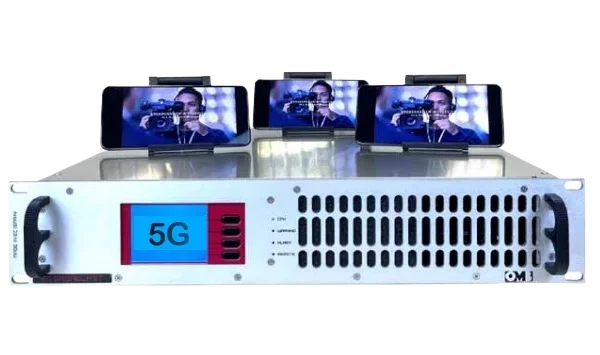
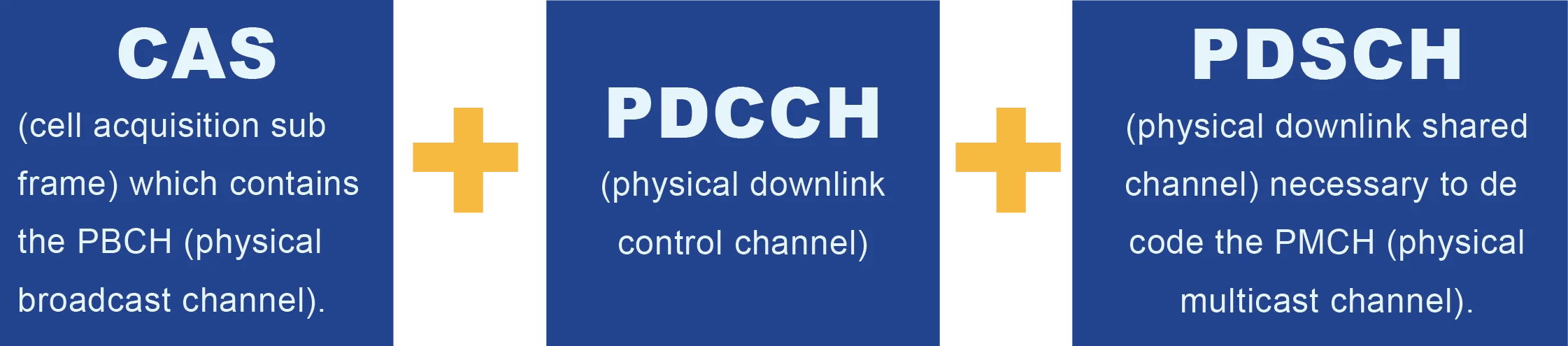
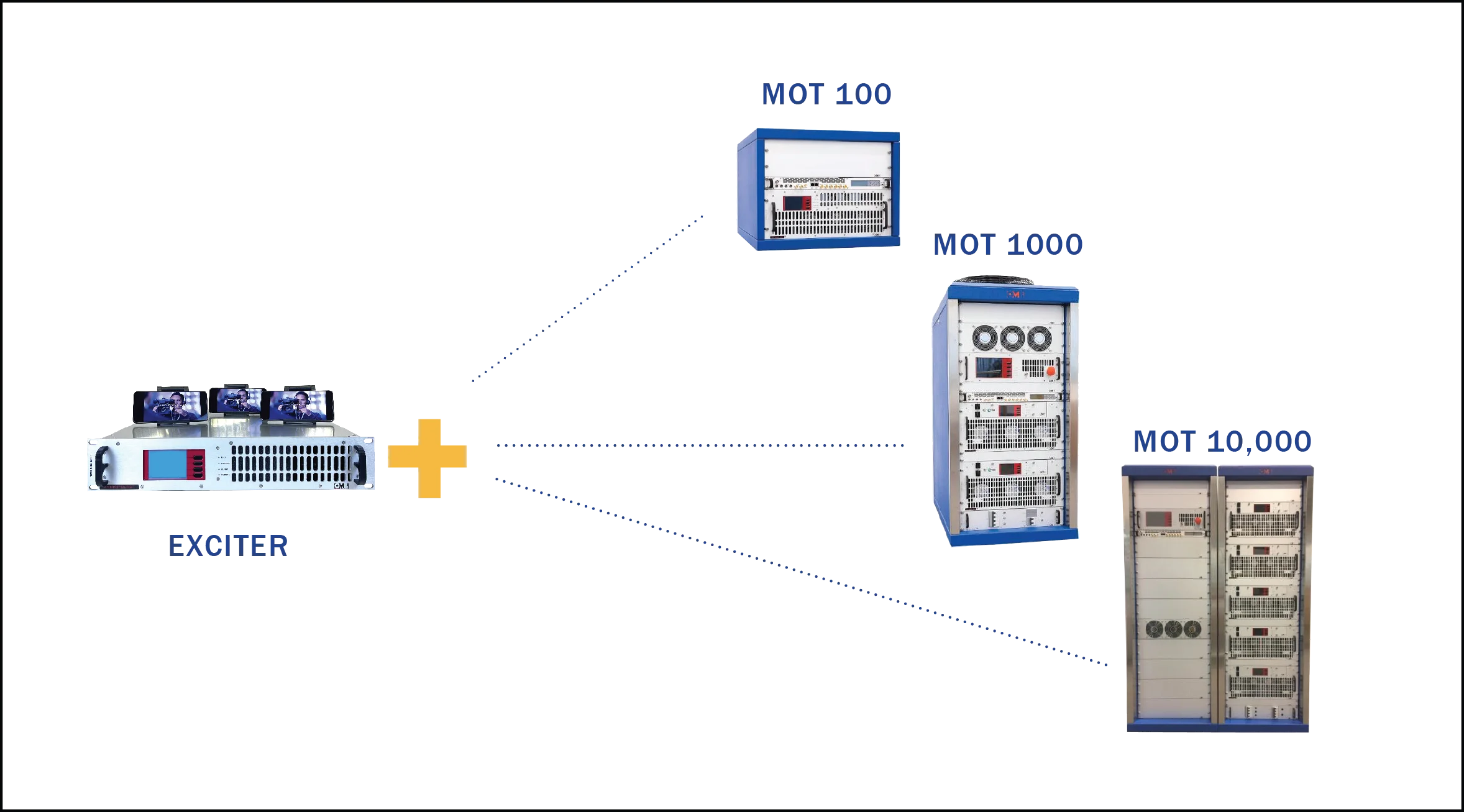
5G Broadcast uses UHF spectrum to deliver television, video and emergency alert content simultaneously to millions of 5G-capable mobile devices — without consuming any cellular network capacity and without requiring an internet connection.
Network-Independent Emergency Alerting
Unlike cellular or internet-based alert systems, 5G Broadcast delivers emergency notifications — earthquakes, hurricanes, floods, wildfires — directly and reliably to every compatible device in the coverage area, even when cellular towers and internet infrastructure are damaged or overloaded.
Robust Emergency Notification
Delivers urgent public safety alerts — for earthquakes, hurricanes, floods and other emergencies — directly and reliably to every 5G device in the affected area, bypassing overloaded cellular and internet infrastructure entirely.
Emergency Alert System Integration
Integrates with national emergency alert systems to push government-mandated warnings directly to compatible devices. Alerts are received even when devices are in standby — functioning as a mass-notification broadcast channel independent of any network.
Enhanced Venue Casting
At sporting events, concerts and large public gatherings, 5G Broadcast ensures every attendee receives a high-definition video stream of the event on their device — without overloading the local cellular towers that would otherwise be paralysed by thousands of simultaneous unicast streams.
In-Vehicle & Mobile TV
Delivers broadcast television and real-time traffic, navigation and emergency content directly to connected vehicles and in-cabin displays — without consuming cellular data — enabling a new class of mobility-aware broadcast services.
National & Strategic Content
Provides a reliable terrestrial broadcast layer for public-interest content of national importance — ensuring continuity of broadcasting for news, government communications and emergency services even when satellite uplinks are unavailable.
Disaster & Crisis Management
During large-scale disasters, governments and emergency services can push coordinated audio-visual instructions, evacuation maps and safety information directly to the public — through a channel that remains operational when all other infrastructure has failed.
Laguna OLA — PtMP FWA System
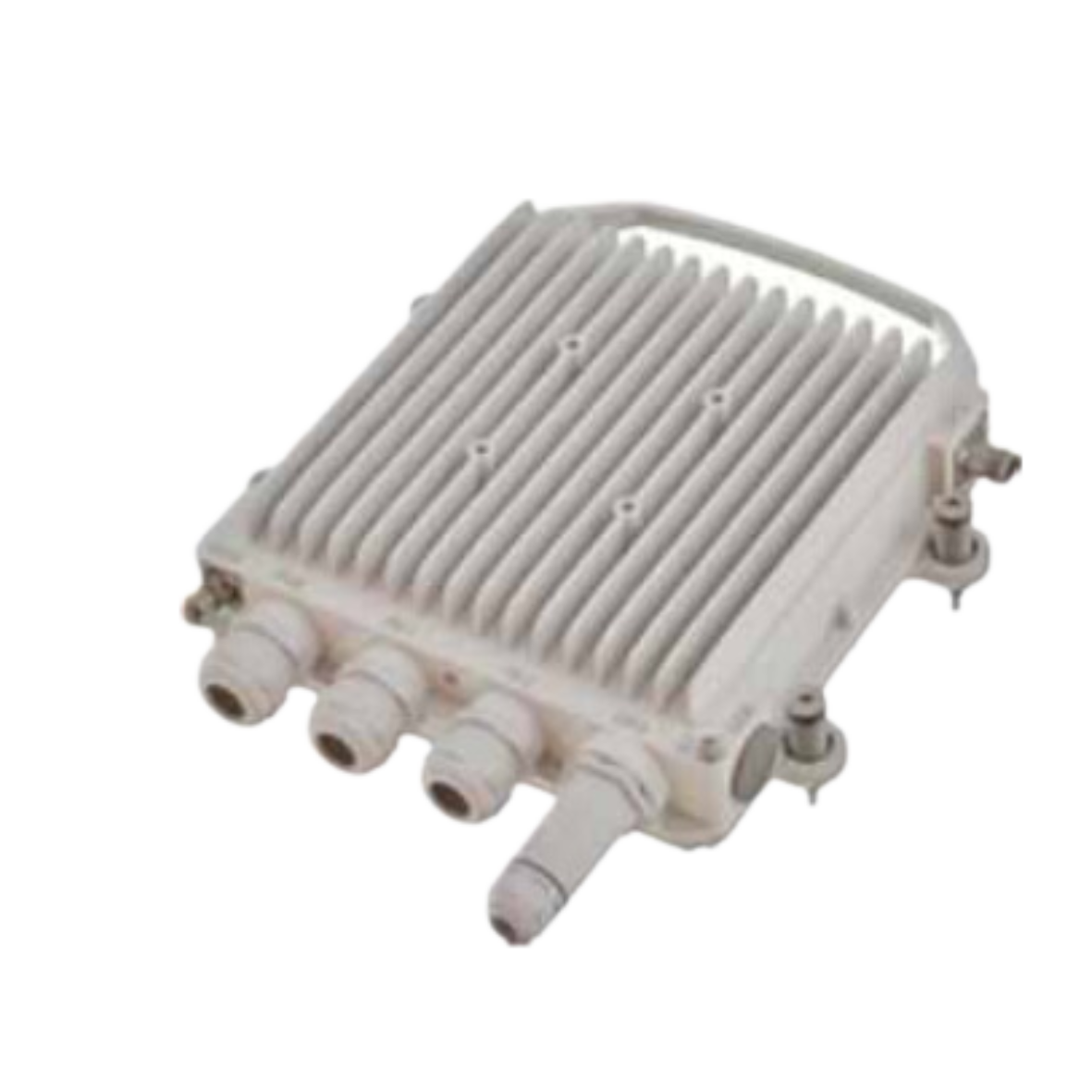
A high-capacity point-to-multipoint Fixed Wireless Access system operating in the licensed 10.5 GHz and 13 GHz bands — delivering over 1.2 Gbps per sector with 1 ms latency to up to 64 remote terminals, ideal for SME and residential FWA deployments.
| Parameter | Specification |
|---|---|
| System Type | Point-to-Multipoint (PtMP) Fixed Wireless Access |
| Duplex Mode | FDD (Frequency Division Duplex) |
| Access Method | TDMA between Access Point (AP) and Remote Terminal (RT) |
| Line Capacity | >1.2 Gbps per sector |
| Over-the-Air Delay | 1 ms |
| Modulation (DL) | AMC — up to 2048 QAM |
| Modulation (UL) | AMC — up to 256 QAM |
| Channel Bandwidth | 7 / 14 / 28 / 56 MHz |
| Remote Terminal Access | Up to 32 (standard) · Up to 64 (software upgrade) |
| Protocol | Private physical and MAC layer protocol |
| Synchronisation | ITU-T G.8262, G.8264 (Synchronous Ethernet) |
| Configuration | Local Web UI & Wi-Fi-based configuration |
| TX Power — AP | Up to 23 dBm (10.5 GHz & 13 GHz) |
| TX Power — RT | Up to 28 dBm (10.5 GHz & 13 GHz) |
| Band | Sub-band | Downlink Frequency (MHz) | Uplink Frequency (MHz) | Duplex Spacing (MHz) |
|---|---|---|---|---|
| 10.5 GHz | — | 10,507.5 – 10,640.5 | 10,157.5 – 10,290.5 | 350 |
| 13 GHz | A Sub-band | 13,017 – 13,143 | 12,751 – 12,877 | 266 |
| 13 GHz | B Sub-band | 13,115 – 13,241 | 12,849 – 12,975 | 266 |